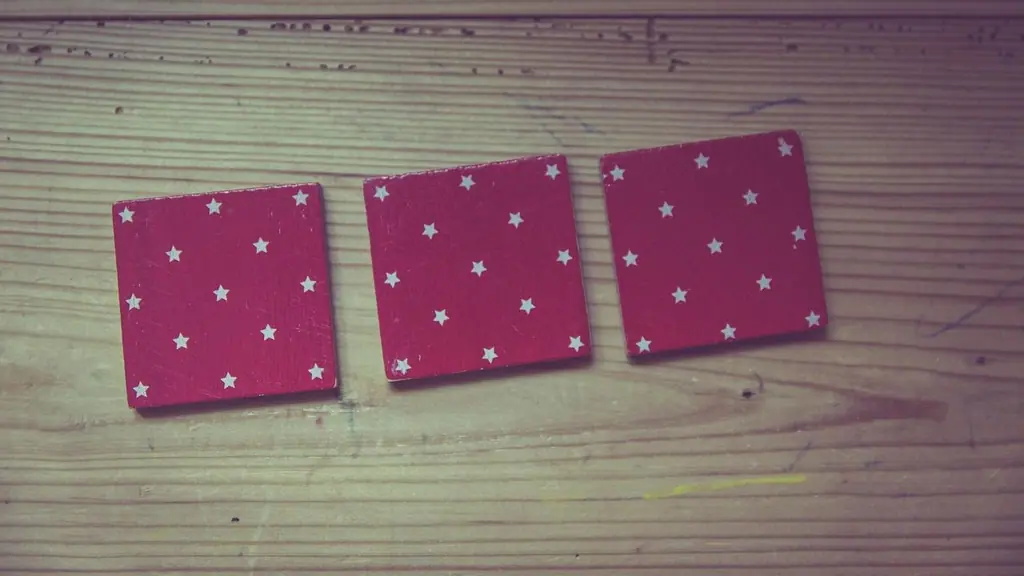
Turn over a card: a star. Turn over another: a moon. Both flip back, and the game begins in earnest. Where was that star again? Memory games are among the first proper games many children play, and they stay popular because they are easy to learn and still challenging for adults.
They are also one of the few games where a four-year-old can genuinely beat a grown-up. Young children often pay closer attention to the cards than distracted adults do.
This guide explains what memory games ask of a child's mind, three classic games you can play with almost no equipment, the strategies that make players better, and how to adjust the difficulty. It is also clear about what memory games cannot do, because some products promise far more than the research supports.
Working memory, explained simply
When people talk about memory games, they usually mean games that exercise working memory: the ability to hold a small amount of information in mind for a short time and use it. It is less like a filing cabinet and more like a small workbench, where you keep the few things you are using right now.
You use working memory when you remember a phone number long enough to dial it, follow a three-step instruction, or keep track of which cards have already been turned over. It holds only a little at once, and the contents fade quickly unless you keep refreshing them.
Harvard's Center on the Developing Child describes working memory as one of three core executive function skills, alongside inhibitory control (pausing before acting) and cognitive flexibility (switching between rules or ideas). These skills develop gradually through childhood and adolescence.
Working memory matters in the classroom. Research led by Susan Gathercole at the University of Cambridge's MRC Cognition and Brain Sciences Unit found that children with poor working memory often looked inattentive, failing to follow instructions and finish activities because they had forgotten key information. From the outside, a memory difficulty can easily look like not listening.
Three classic memory games
| Game | How it works | What it asks of players | Suggested starting age | Materials |
|---|---|---|---|---|
| Pairs (Concentration) | Cards face down in a grid; turn two per turn; keep matches | Remembering locations, attention to other players' turns | About 3 to 4 with 6 to 8 pairs | A deck of picture cards, or two of each playing card |
| Kim's game | Study a tray of objects, cover it, and say what is missing or what changed | Visual memory, noticing detail, naming objects | About 4 with 4 to 5 objects | A tray, a cloth, small household items |
| Sequence recall | Repeat a growing list or pattern in order ("I packed my suitcase and in it I put...") | Holding items in order, adding to a list | About 5 with 2 to 3 items | Nothing, or a few colored blocks |
Pairs. Players take turns turning over two cards. A match is kept and that player usually goes again; otherwise both cards flip back. The game rewards watching other players' turns closely, because every card they reveal is free information. Harvard's activities guide lists Concentration-style games among those that exercise working memory for children around 5 to 7.
Kim's game. Named after a memory exercise in Rudyard Kipling's 1901 novel Kim, this is a favorite in classrooms and youth groups. Put a handful of objects on a tray, let players study them for a set time, then cover the tray and remove one item. What's missing? Variations: move an item instead of removing it, or ask players to list everything they remember.
Sequence recall. In "I packed my suitcase", each player repeats the list so far and adds one item. Clapping rhythms, copying a pattern of colored blocks, or "Simon says"-style action sequences all work the same way. Harvard's guide mentions packing games and songs that build up verse by verse as working memory challenges.
Strategies children can learn
Children often play memory games by turning cards at random and hoping. Teaching a few strategies makes the game more satisfying, and the strategies are useful thinking habits in their own right.
- Search systematically. Instead of turning random cards, work along the rows. You will know which cards are still unknown, and you will not waste turns on cards you have already seen.
- Name what you see. Say it aloud or in your head: "star, top corner." Words give your memory a second hook alongside the picture.
- Make a story or a link. "The moon is next to the window, like at night." Silly links are easier to remember.
- Group things. In Kim's game, sort the tray mentally: "three things for eating, two for writing." Five items become two groups.
- Use the other players' turns. Every card someone else reveals is information you did not have to spend a turn on.
- Turn the known card second. If you remember where one star is, turn over an unknown card first. If it's the other star, you have a match; if not, you have learned a new card without wasting your known one.
Try this
Model your thinking aloud when you play together: "I think the heart was in this row... I'm going to start from the end." Children pick up strategies far faster by hearing someone use them than by being told the rules of good play.
Scaling difficulty up and down
The best level is one where a child succeeds often but has to concentrate to do it. Adjust one thing at a time.
To make it easier:
- fewer pairs or objects (start with 4 to 6 pairs for preschoolers);
- pictures that look very different from one another;
- leave matched cards face up, so there is less to scan;
- play cooperatively, as a team against the game.
To make it harder:
- more cards, in a bigger grid;
- cards that look similar (only small differences);
- in Kim's game, shorter study time or more objects;
- in sequence recall, longer lists or repeating the list backward.
Signs it is too hard: guessing at random, losing interest, or getting upset after each miss. Signs it is too easy: winning without trying, or getting bored. Either way, change the level, not the child's attitude.
What memory games do, and don't do
It is tempting to assume that if working memory predicts school success, then training working memory will improve school success. Researchers have tested that idea directly.
What the evidence says
Practice helps the practiced skill; it does not reliably spread further. A 2013 meta-analysis by Melby-Lervåg and Hulme combined 23 studies of working memory training programs in children and adults. The programs produced reliable short-term gains on working memory tasks, but there was no convincing evidence that the gains generalized to other skills such as reading, arithmetic or attention control. A 2016 review of brain-training studies by Simons and colleagues reached a similar conclusion across many products. Gathercole's group at Cambridge has also reported that training can produce lasting gains on working memory tasks themselves, without those gains so far extending to learning tasks. This is a consistent body of research, though most studies used computerized training programs rather than family card games.
What this means in practice:
- Memory games are good for practicing memory games: children get better at them, which is satisfying.
- They do not raise intelligence, guarantee better grades or treat attention conditions such as ADHD. If you are worried about a child's memory, attention or learning, talk to your pediatrician or the child's teacher.
- In daily life, the classroom guidance from Gathercole's team focuses on reducing memory load instead: break instructions into short steps, write things down, and check understanding.
Played for fun, memory games still offer plenty: turn-taking, focus, a fair contest between ages, and a lot of laughter at wrong guesses. Our guide on whether brain-training games work explains the research on transfer in more detail.
Try it in the browser
Our Memory Match game is a calm version of pairs, with no countdown and no penalty for pausing. Shapes differ by outline, not color, so color vision is never needed to find a match.
Play it
Play Memory Match. On Easy, practice the "search along the rows" strategy. On Medium, try naming each shape and its position aloud. On Hard, use the "turn the unknown card first" trick and see whether your move count drops.
For a sequence challenge with numbers instead of pictures, try Sequence Builder, and read our guide to sequencing activities for kids for more ideas. If you want card and board games the whole family can play together, see cooperative games for families.
Healthy play
Keep memory games short and light. Stop while everyone is still enjoying it, celebrate good strategies rather than wins, and avoid using memory games as a test. A game that feels like an exam stops being a game.
Sources
- Enhancing and Practicing Executive Function Skills with Children from Infancy to Adolescence, Center on the Developing Child, Harvard University
- Understanding how working memory problems impair classroom learning, MRC Cognition and Brain Sciences Unit, University of Cambridge
- Is working memory training effective? A meta-analytic review (Melby-Lervåg & Hulme, Developmental Psychology, 2013), PubMed, US National Library of Medicine
- Do "Brain-Training" Programs Work? (Simons et al., Psychological Science in the Public Interest, 2016), PubMed, US National Library of Medicine