Ask ten people what a puzzle is and you might hear about crosswords, jigsaws, sudoku, a wooden brain-teaser from a grandparent's shelf, or a game on a phone where you tilt a ball through a maze. They are all puzzles, but they ask for quite different kinds of thinking.
Knowing the main families helps in practical ways. A child who loves jigsaws but groans at word games is not "bad at puzzles"; they may simply prefer spatial challenges to verbal ones. A teacher looking for a warm-up can choose a puzzle type that matches the lesson. And players who are bored of one kind of puzzle can find a neighboring family that feels fresh.
This field guide sorts puzzles into five broad families, plus a few close relatives, with what each one mainly asks of you and where beginners can start. The families overlap, and that is fine: they are a map, not a rulebook.
How to sort puzzles: what the solver has to do
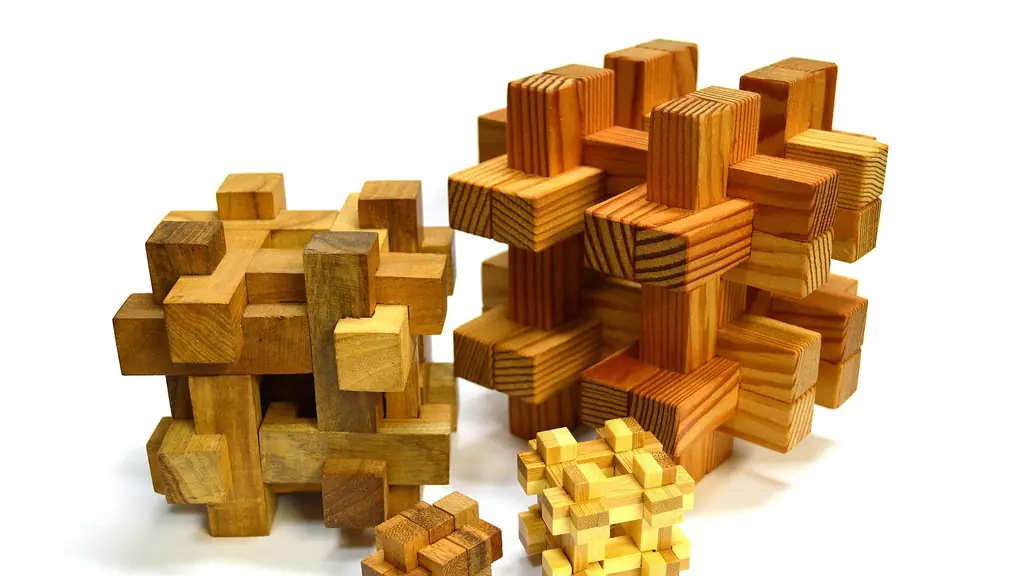
Collectors and historians have sorted puzzles for a long time. The Jerry Slocum Mechanical Puzzle Collection at Indiana University's Lilly Library groups physical puzzles by what the solver has to do: put pieces together, take them apart, free a tangled part, follow a sequence of moves and so on. The same puzzle can sit in more than one category.
We use the same principle here, but for all puzzles, on paper, on a table or on a screen: what kind of thinking does the puzzle mainly ask for?
| Family | Main kind of thinking | A gentle place to start | Offline examples | Our game |
|---|---|---|---|---|
| Logic | Deduction from rules and clues | Simple "who has what" puzzles with three people | Logic grids, sudoku, nonograms | Logic Grid |
| Spatial | Picturing shapes, turning and fitting them | Large-piece jigsaws and shape sorters | Jigsaws, tangrams, block building | Spatial Rotation |
| Pattern | Spotting a rule in a sequence | Repeating color or shape patterns | Bead patterns, number sequences | Pattern Challenge, Sequence Builder |
| Word | Vocabulary, spelling and wordplay | Picture word searches and simple riddles | Crosswords, anagrams, word ladders | (none yet) |
| Physics | Predicting how objects move | Building towers and ramps | Marble runs, balance puzzles | (none yet) |
The "gentle place to start" column is a rough guide, not a rule. Children vary enormously, and interest matters as much as age.
Logic puzzles: following the clues
Logic puzzles give you a set of rules and clues and ask you to work out the only answer that fits all of them. The key skill is deduction: if this is true, then that must be true. Good logic puzzles never require guessing.
The family includes logic grids ("Three friends each have a different pet..."), sudoku, nonograms (picture grids solved from number clues) and many more. Sudoku has a nicely tangled history: according to the Japanese puzzle publisher Nikoli, it did not invent the puzzle but found it in an American puzzle magazine under the name "Number Place", introduced it to Japanese readers in 1984, and gave it the name that later spread worldwide.
Beginners do best with very small puzzles where every clue matters. Our guide on solving logic grid puzzles walks through the method step by step.
Spatial puzzles: shapes in the mind's eye
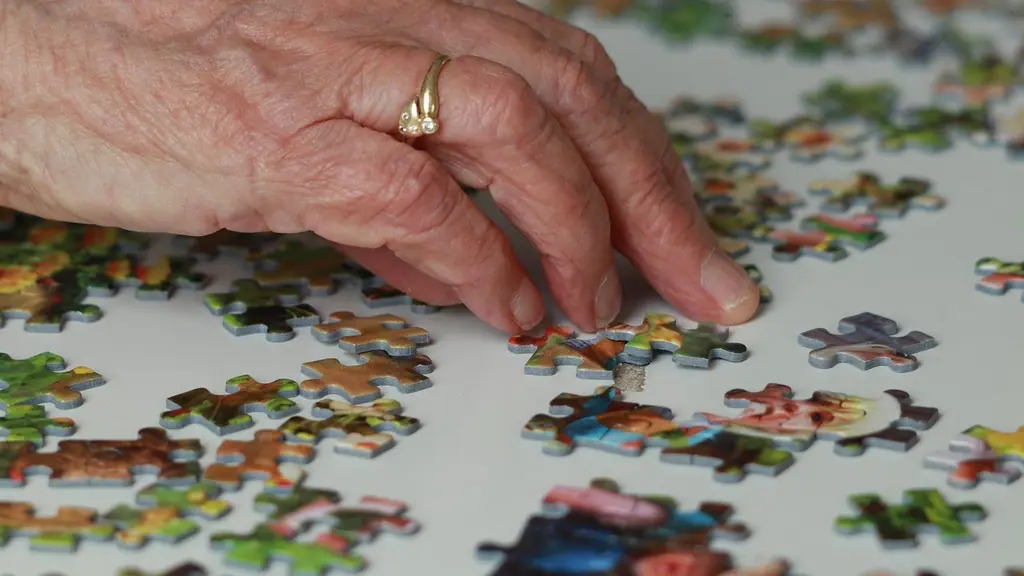
Spatial puzzles ask you to picture shapes, turn them in your head, and work out how pieces fit together. Jigsaws are the most familiar, along with tangrams, block-building challenges, folding puzzles and mental-rotation tasks.
This family has some of the oldest documented history. The Lilly Library describes the Stomachion, a square divided into fourteen pieces, as the earliest documented example of a put-together puzzle, and traces a tangram craze across Europe and the United States in the early 1800s.
It also has some of the most interesting research. In a study published in Developmental Psychology in 2012, researchers at the University of Chicago observed 53 children at home between the ages of about 2 and 4. Children who were seen playing with puzzles did better on a test of mentally transforming shapes at age 4½, even after the researchers accounted for parent education and income. That is a correlation from one modest-sized study, not proof that puzzles cause better spatial skills, but it fits with a wider body of work on spatial play. Our guide to spatial reasoning looks at that research more closely.
Pattern puzzles: finding the rule
Pattern puzzles show you a sequence and ask what comes next, or what fills a gap. The rule might involve shape, color, size, direction or numbers, and harder puzzles combine several rules at once.
Young children meet patterns early through repeating bead strings and clapping rhythms. Older players move on to number sequences (2, 4, 8, 16...) and visual grids where rows and columns each follow a rule. The core skill is the same: notice what changes, notice what stays the same, and test a guess against every item.
Play it
Try Pattern Challenge for shapes and Sequence Builder for numbers. Both explain the rule after every answer, so even a wrong answer teaches you something to look for next time.
Word puzzles: playing with language
Word puzzles use vocabulary, spelling, meaning and wordplay. Crosswords, anagrams, word ladders (changing one letter at a time to turn CAT into DOG), word searches, riddles and cryptic clues all belong here.
Word puzzles depend more on reading level and language background than the other families, so they can be frustrating for early readers or for children playing in a second language. Picture-based versions and riddles told aloud are a good way in.
Physics puzzles: predicting motion
Physics puzzles ask you to predict how objects will move, fall, roll, balance or collide. On a table, that means marble runs, domino chains and balancing challenges. On screens, physics puzzle games simulate gravity and momentum and ask players to build structures or set up chain reactions.
The key skill is prediction followed by testing: you form a guess about what will happen, try it, and adjust. Physical versions have the advantage of real materials; digital versions make it easy to reset and try again without picking up a hundred dominoes.
Close relatives: memory, mazes, movement and observation
A few puzzle types do not fit neatly into the five families:
- Memory puzzles such as matching pairs ask you to hold information in mind. Try Memory Match.
- Mazes and route puzzles sit between spatial and logic puzzles.
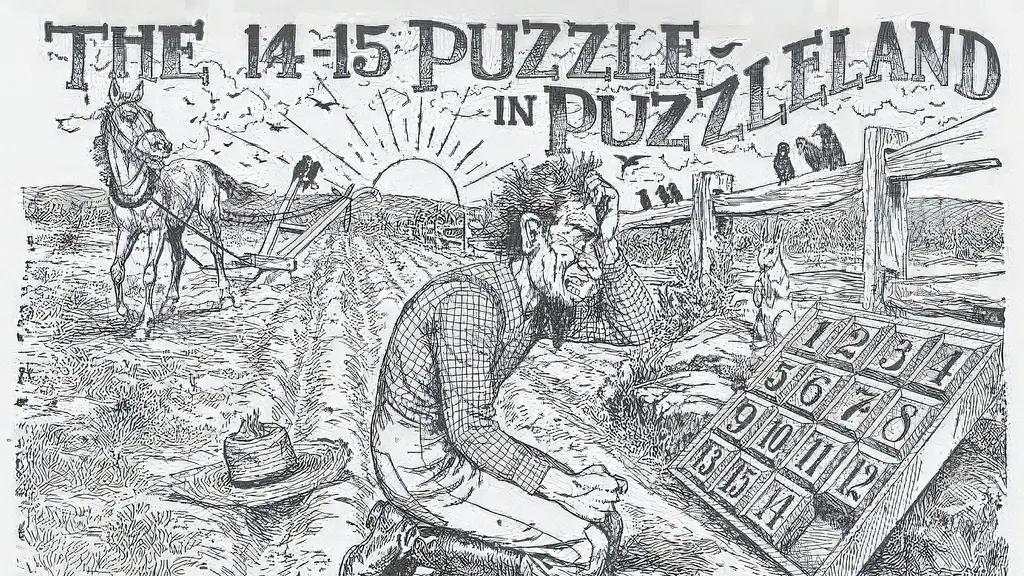
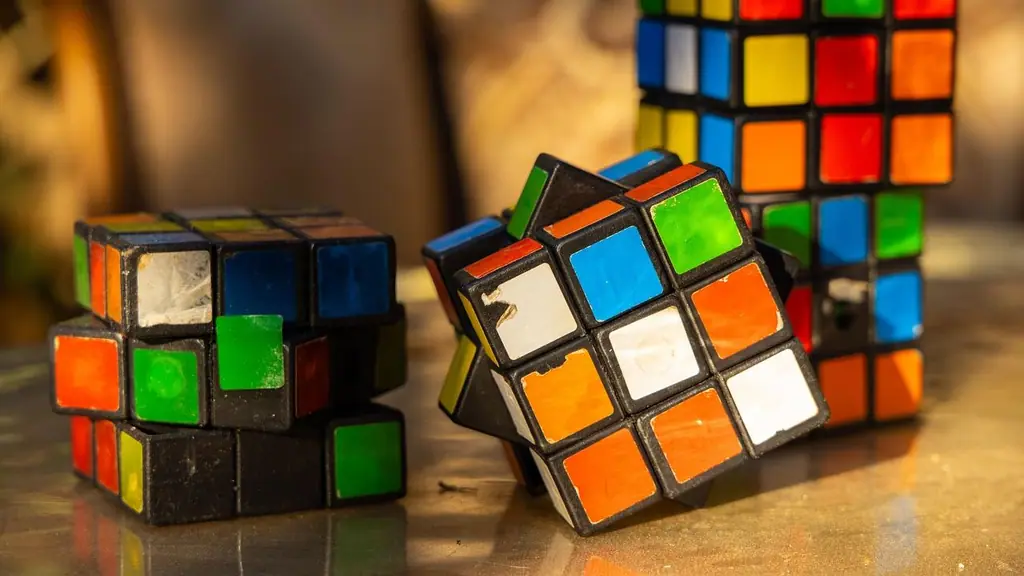
- Sequential-movement puzzles, like the sliding 15 puzzle and the Rubik's Cube, are solved through a series of moves, and planning ahead matters more than any single insight.
- Observation puzzles such as spot-the-difference test careful visual attention.
Puzzles have a long, shared history
Many of today's favorite puzzles spread through print. From January 1957, the writer Martin Gardner's "Mathematical Games" column in Scientific American introduced a generation of readers to recreational puzzles; according to the MacTutor history of mathematics archive at the University of St Andrews, he wrote it monthly for 25 years and the columns were later collected in fifteen books. Newspapers and magazines carried crosswords, logic puzzles and number puzzles to millions of homes. Digital games have added new twists, such as simulated physics that can be reset in a click, but most still belong to the same old families.
Choosing a type: a quick checklist
Try this
- Start with what the player already enjoys. A child who builds with blocks will probably take to spatial puzzles first.
- Try a neighbor next. Logic fans often enjoy pattern puzzles; jigsaw fans often enjoy tangrams.
- Keep it small at first. A tiny puzzle that gets finished beats a big one abandoned halfway.
- Avoid "IQ" labels. Puzzles practice particular skills; they do not measure or raise intelligence.
- Mix paper and screen. Each has strengths.
If you want a sense of how difficulty builds within any of these families, our guide to how puzzle games get harder explains the design side. Or simply browse the full set of games on our Play page and see which family pulls you in.
Sources
- Sudoku: history and rules, Nikoli Co., Ltd.
- Martin Gardner (biography), MacTutor History of Mathematics, University of St Andrews
- Mechanical puzzle category spotlight 1: put-together puzzles, Lilly Library, Indiana University
- Early puzzle play: a predictor of preschoolers' spatial transformation skill (Levine et al., 2012), Developmental Psychology, via PubMed Central
- What are mechanical puzzles?, Lilly Library, Indiana University