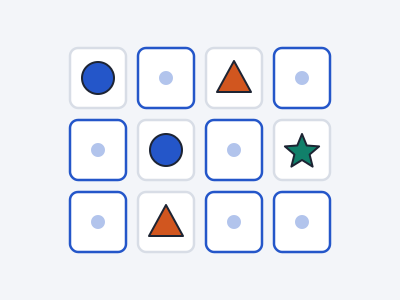
Memory Match
A calm card-matching game with three grid sizes. Turn two cards at a time, remember where each shape hides, and clear the board with as few moves as you can.
Original puzzle games that run in your browser: memory, patterns, sliding tiles, mazes, sequences, rotation, logic and observation. No ads, no sign-up. Each has three levels, works with keyboard, mouse or touch, and never needs an account.
A calm card-matching game with three grid sizes. Turn two cards at a time, remember where each shape hides, and clear the board with as few moves as you can.
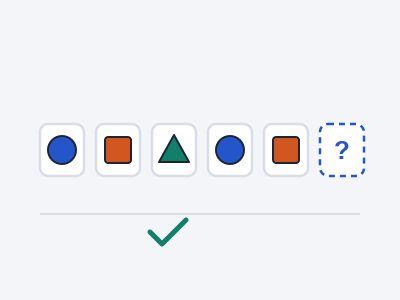
Spot the rule behind a row of shapes and pick the missing piece. Patterns repeat by shape, fill, size or direction, and every answer comes with an explanation.
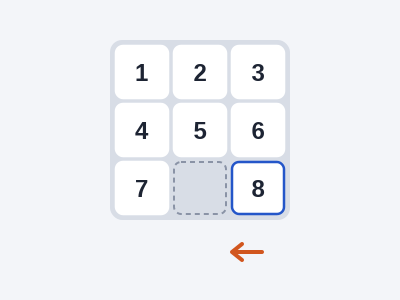
The classic number-tile puzzle in three sizes, from a gentle 3×3 to a demanding 5×5. Every shuffle is checked to be solvable, so a solution always exists.
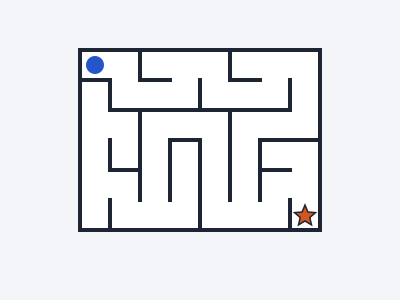
Guide a marker from the top-left corner to the star through freshly generated mazes. Each has one route between any two points, so the exit is always reachable.
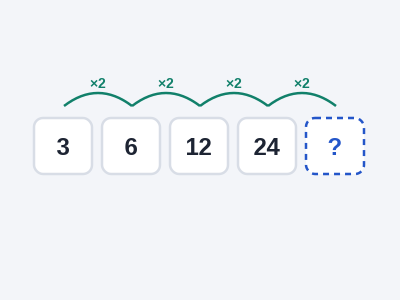
Work out the rule behind a number sequence and choose what comes next: counting on, doubling, growing gaps and more, with each rule explained after you answer.
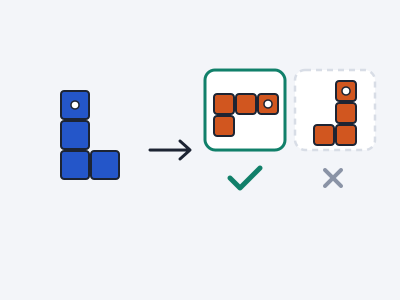
Find the shape that has only been turned, not flipped. Generated block shapes and mirror-image distractors make a visual puzzle with three difficulty levels.
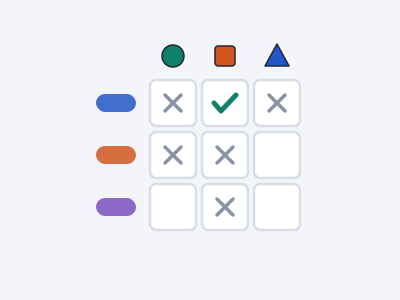
Read the clues, mark yes and no in a grid, and deduce who has which pet, snack or hobby. Every puzzle is checked by a solver to have exactly one answer.
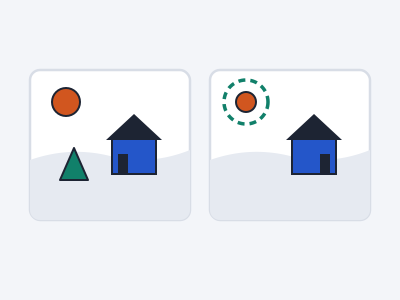
Compare two freshly drawn scenes and find every change: missing objects, swaps, size changes, stripes or flips. Each round generates a new original scene.
Nothing to sign up for and nothing to buy. The games load from this site only.
Best scores and finished levels are kept in your browser’s local storage. Each game has a reset button.
Timers are optional and there are no streaks or daily rewards to chase. Stop whenever you like.
Keyboard, mouse and touch controls, visible focus, screen-reader announcements and reduced-motion support.
Read more in our editorial standards.
Game Discovery
How to judge a puzzle game before you buy: decoding store pages, ratings and purchase notices, reading reviews, using demos and refunds, and spotting red flags.
Game Discovery
A guide to game accessibility: common settings, adaptive controllers, how to check a game before buying, and how browser games support keyboard and touch play.
Screen Time and Digital Wellbeing
A balanced look at research on video games and kids: thinking skills, learning, wellbeing, social play and risks, with notes on how strong each finding is.

Screen Time and Digital Wellbeing
Practical routines that make gaming easier to stop: protecting sleep, visible transitions, natural stopping points, movement breaks and calm stop-time habits.

Independent Games
A beginner's guide to game design for kids: the core loop, goals, rules, feedback and challenge, paper prototyping a puzzle, family playtests and safe sharing.
Independent Games
How wordless puzzle games teach through affordances, color, sound and level design, why that helps young and multilingual players, and where it falls short.