When your child turns a jigsaw piece until it fits, figures out how to get from the front door to the playground, or builds a block tower that does not fall over, they are using spatial reasoning. It is the kind of thinking that deals with shapes, positions, directions and how things fit together, in the real world and in the mind's eye.
Spatial reasoning gets less attention than reading or arithmetic, partly because it is not a school subject of its own. But researchers have studied it for decades, and some of their findings are useful for parents: spatial skills come in several kinds, they are linked with later success in science and engineering, and, importantly, they can improve with practice.
This guide explains what spatial reasoning is, what the research shows (and how strong it is), and simple everyday ways to give children more spatial experience.
What counts as spatial reasoning
One definition, from the psychologist David Lohman and quoted in a major 2009 review, describes spatial ability as "the ability to generate, retain, retrieve, and transform well-structured visual images." In everyday terms, it covers several related skills:
| Skill | What it means | Everyday example |
|---|---|---|
| Mental rotation | Turning an object in your head | Seeing that a jigsaw piece will fit if you turn it |
| Spatial visualization | Imagining how parts combine, fold or unfold | Picturing what a box looks like flattened out |
| Perspective taking | Imagining a scene from another viewpoint | Working out what someone across the table can see |
| Wayfinding | Finding and remembering routes | Navigating a park, reading a map |
| Spatial language | Words for position and shape | "Above", "behind", "corner", "turn left" |
Researchers do not all divide spatial skills the same way. A 2013 review led by David Uttal used a framework with two dimensions: whether a task is about the shape of a single object or about how objects relate to each other and their surroundings, and whether the task involves things staying still or moving and changing. A jigsaw piece is about one object's shape; a map is about relationships between places. You do not need the jargon, but it is a reminder that "spatial" is a family of skills, not one.
Mental rotation: a classic experiment
The best-known spatial skill is mental rotation, and it has a famous origin. In 1971, the psychologists Roger Shepard and Jacqueline Metzler showed people pairs of drawings of three-dimensional block shapes and asked whether the two drawings showed the same object. The time people took to answer increased steadily with the angle between the two shapes. The bigger the turn, the longer it took, as if people were rotating a mental picture at a steady speed.
That result, published in Science, helped show that people really do manipulate mental images, and mental-rotation tasks have been a staple of spatial research ever since. Our Spatial Rotation game uses a two-dimensional version: find the shape that has only been turned, not flipped.
Why researchers link spatial skills with science and engineering
The strongest evidence linking spatial skills to later outcomes comes from very large long-term studies.
In a 2009 paper in the Journal of Educational Psychology, Jonathan Wai, David Lubinski and Camilla Benbow analyzed data from a stratified random sample of about 400,000 U.S. high school students who were tested in grades 9 to 12 and tracked for 11 years, and set those results alongside older studies and more recent data sets. Across decades of data, adolescents with stronger spatial ability were more likely to go on to advanced degrees and careers in science, technology, engineering and mathematics (STEM). The authors argued that talent searches that look only at math and verbal scores miss many young people with STEM potential.
It is important to read this carefully. These are correlations: spatial ability measured in adolescence predicted later choices and achievements on average. They do not show that training a particular child's spatial skills will lead them into a STEM career, and many other factors, from interests and teaching to opportunity, play large roles.
Can spatial skills be improved?
This is the encouraging part. If spatial skills were fixed, the STEM link would be interesting but not very useful. The evidence suggests they are not fixed.
What the evidence says
A large meta-analysis says spatial skills respond to practice. Uttal and colleagues pooled 217 studies of spatial training, in children and adults, published in Psychological Bulletin in 2013. On average, training improved performance by about half a standard deviation compared with control groups (Hedges's g = 0.47), a moderate effect. The improvements were still present when people were tested again after a delay, and they carried over to other spatial tasks that had not been trained.
What it does not show. The studies measured spatial tests, not school grades or careers. The authors suggest that spatially rich education could increase participation in math, science and engineering, but that is a reasoned proposal rather than a proven outcome. And "spatial training" in these studies covered many kinds of activity, so the results do not single out any one game or toy.
Early childhood: puzzles, blocks and spatial talk
For younger children, two studies are often cited.
A 2012 study in Developmental Psychology observed 53 children at home every four months between roughly ages 2 and 4. Children who were seen playing with puzzles did better on a task involving mentally moving two-dimensional shapes at age 4½, after accounting for family income, parent education and the variety of words parents used. Among the puzzle players, those who played more often did better.
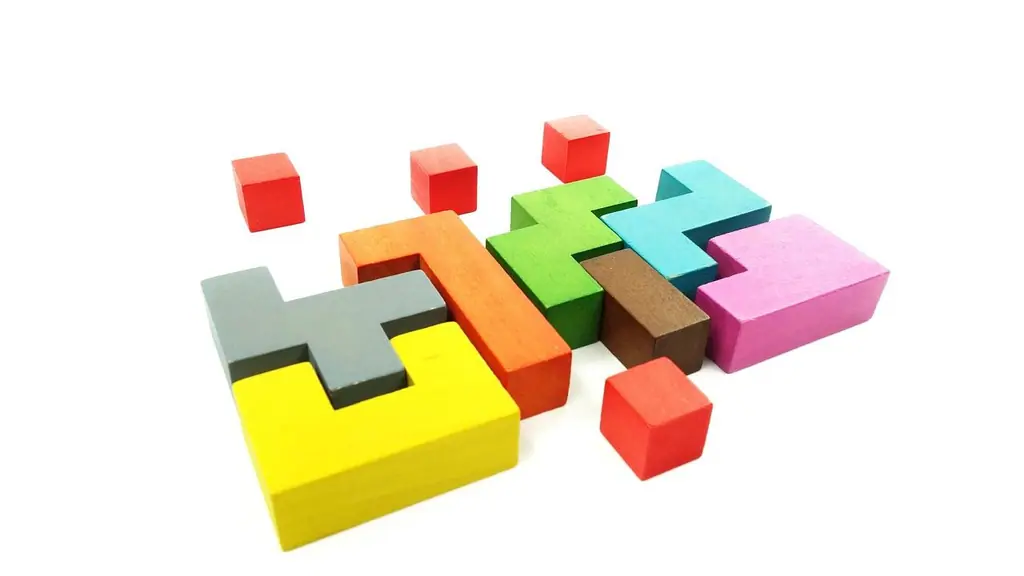
A 2014 study in Child Development asked 102 three-year-olds to copy structures built from interlocking blocks. How well they did predicted a significant part of the differences in their early math skills at the same age. Boys and girls performed similarly, but children from lower-income families were already behind on block building, and their parents reported using fewer spatial words.
Both studies are correlational, so they cannot prove that puzzles or blocks caused the differences. Together with the training research, though, they support a sensible, low-cost idea: give young children plenty of hands-on spatial play, and talk about it as you go.
Everyday spatial activities by age
None of these needs special equipment. Choose a few that fit your child's interests.
| Age (roughly) | Activities | Words to use |
|---|---|---|
| Toddlers and preschoolers | Large-piece jigsaws, shape sorters, stacking blocks, sand and water play, "hide the toy" games | on, under, behind, next to, big, small |
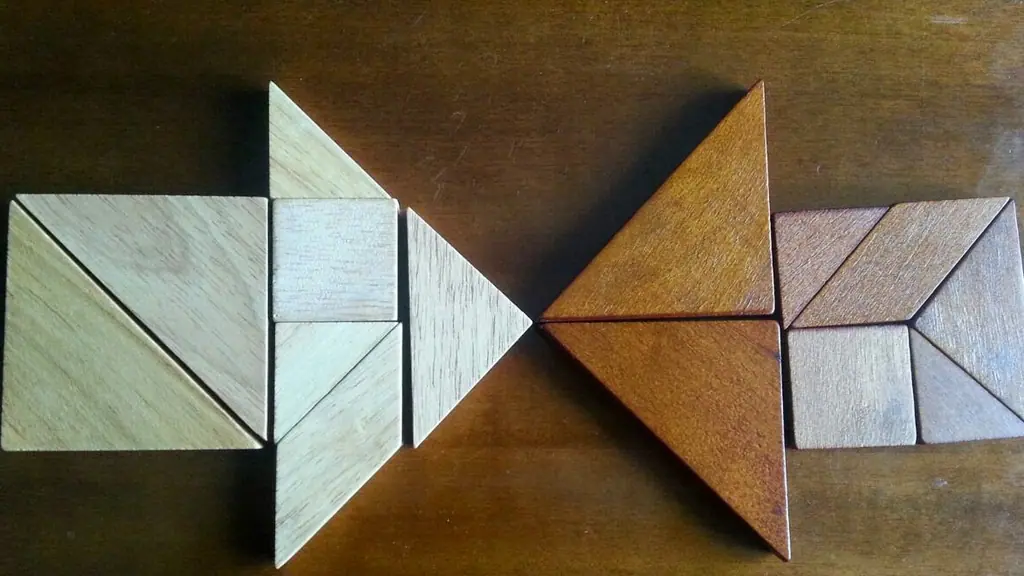
| Early school years | Tangrams, building from simple picture instructions, drawing a map of their bedroom, simple mazes, paper folding | turn, flip, corner, edge, left, right, upside down |
| Older children | Origami, map reading on walks, model kits, sketching an object from different sides, sliding puzzles, designing levels for a game | rotate, mirror image, scale, north, view from above |
Try this
Make spatial talk a habit. Instead of "put it there", try "put it on the shelf above the books". Instead of "that one", try "the triangle with the long side at the bottom". Ask questions such as "what would this look like from the other side?" These small changes add spatial language to everyday routines.
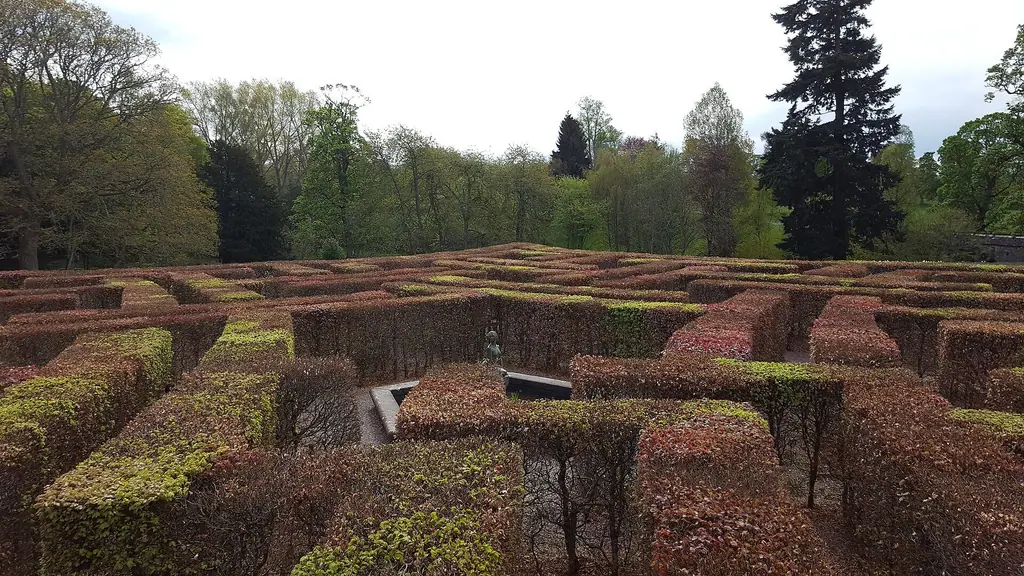
Wayfinding is easy to build into ordinary outings: let a child lead the way home from the library, or draw a map of the route together afterward. Our guide to mazes and maps has more ideas. For shape-building, our tangram guide shows how to make a set from card in minutes.
Using our Spatial Rotation game
Play it
In Spatial Rotation, each round shows a shape made of squares and three or four choices. Only one is the same shape turned; the others are mirror images or different shapes. Press Turn it to rotate the example as often as you like. A good habit is to pick one distinctive corner, find it in each choice, and ask whether it ends up on the correct side. Easy uses four-square shapes; Hard uses six squares and near misses.
Rotation puzzles on a screen are one helpful kind of practice among many. They work best alongside hands-on building, where children can physically turn and flip real pieces.
A few myths to set aside
- "Some people just aren't spatial." Skills vary, but the training research shows that people at many levels improve with practice.
- "Spatial games make children smarter." Practice tends to improve the kinds of spatial tasks practiced and related ones. It is not a shortcut to higher general intelligence; see our guide to whether brain-training games work.
- "It's too late after early childhood." The training studies in the meta-analysis included teenagers and adults as well as young children, and the overall finding was that practice helps.
For more ideas, explore our spatial thinking topic, where guides and games are grouped together.
Sources
- Spatial ability for STEM domains: aligning over 50 years of cumulative psychological knowledge solidifies its importance (Wai, Lubinski and Benbow, 2009), Journal of Educational Psychology, American Psychological Association
- The malleability of spatial skills: a meta-analysis of training studies (Uttal et al., 2013), Psychological Bulletin; author copy, Northwestern University
- Mental rotation of three-dimensional objects (Shepard and Metzler, 1971), Science, via PubMed
- Early puzzle play: a predictor of preschoolers' spatial transformation skill (Levine et al., 2012), Developmental Psychology, via PubMed Central
- Deconstructing building blocks: preschoolers' spatial assembly performance relates to early mathematical skills (Verdine et al., 2014), Child Development, via PubMed Central