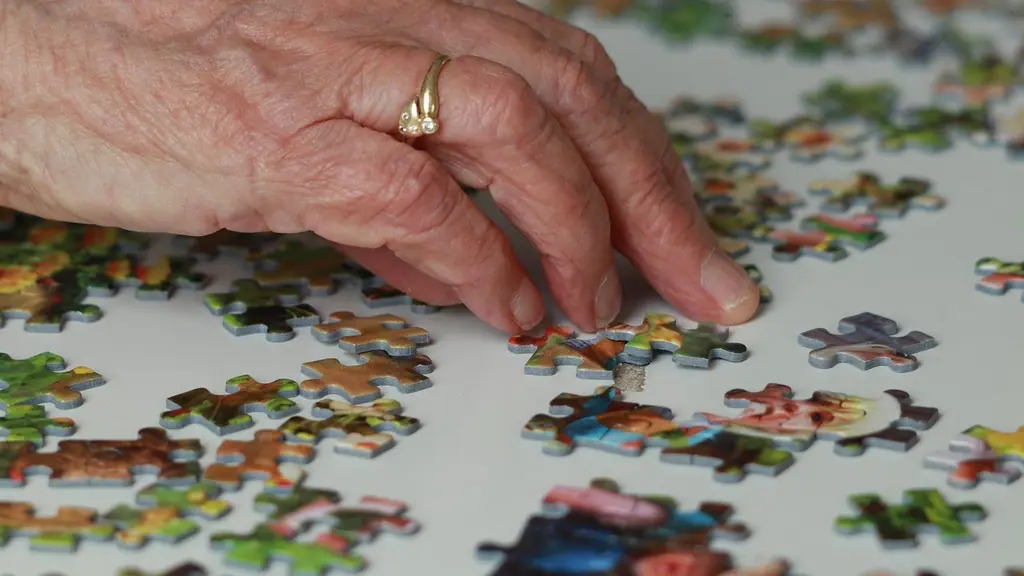
A half-finished jigsaw on the dining table and a puzzle game on a tablet can look like opposites: one slow, physical and shared, the other quick, glowing and often played alone. Many families quietly worry that the second is crowding out the first.
The good news is that this does not have to be a contest. Physical and digital puzzles are good at different things, and a household can enjoy both without keeping a stopwatch on every minute. This guide sets out what each kind offers, what current pediatric and public-health guidance actually says, and how to build a relaxed weekly mix that suits your family.
What paper and pieces do well
Physical puzzles, such as jigsaws, tangrams, wooden shape puzzles and printed logic puzzles, have some strengths that are hard to copy on a screen.
- Hands and eyes work together. Turning a jigsaw piece, feeling an edge and trying it in place gives young children direct, physical feedback about shape and orientation.
- They invite company. A puzzle on a table is easy to join for five minutes. Grandparents, siblings and visitors drift in and out.
- They have natural stopping points. A finished jigsaw ends. Nothing suggests "just one more".
- They create talk. Adults naturally say things like "turn it around", "the edge piece" and "it goes above the tree", words that describe space and position.
That last point has some research behind it. In a 2012 study published in Developmental Psychology, researchers observed 53 families at home over almost two years, when the children were roughly 2 to 4 years old. Children who were seen playing with puzzles did better on a shape-transformation task at age 4½, even after accounting for parent education and income. The researchers also rated the quality of puzzle play, combining puzzle difficulty, parent engagement and parents' spatial language. This was an observational study: it shows a link, not that puzzles caused the difference. It does suggest that the conversation around a puzzle may matter, not just the puzzle itself.
What screens do well
Digital puzzles have real strengths too, and it is worth naming them instead of treating screens as a lesser substitute.
- Instant, specific feedback. A good game can tell a player right away whether a move works, and some explain why.
- Endless fresh puzzles. A well-made generator can produce a new puzzle every time, at a chosen level.
- Adjustable difficulty. Switching from easy to hard takes one tap, and a child can move back down without anyone noticing.
- Accessibility. Screen readers, large tap targets, keyboard controls and zoom can open puzzles to players who find small physical pieces difficult.
- No lost pieces. A missing jigsaw piece can end a puzzle for good. A digital one resets cleanly.
| Physical puzzles | Digital puzzles | |
|---|---|---|
| Feedback | Slow, physical, self-checked | Fast and specific |
| Variety | Limited to what you own or print | Often unlimited |
| Social play | Easy to share around a table | Easier alone, but can be shared |
| Stopping points | Built in | Depends on the game's design |
| Adapting difficulty | Swap puzzles or remove pieces | Usually a setting |
| Accessibility | Tactile and large-piece options | Screen readers, zoom, controls |
What current guidance says about screens
Screen-time advice changed in 2026, and it helps to know what the main bodies now say.
What the evidence says
American Academy of Pediatrics (AAP). In January 2026 the AAP published a new policy statement, "Digital Ecosystems, Children, and Adolescents", in Pediatrics, with a companion technical report. It replaced the academy's earlier media guidance. Rather than leading with fixed minute limits, it asks families to look at quality, context and conversation: what children use, how and with whom. It highlights engagement-based design such as autoplay, endless scrolling and targeted ads as features that can displace sleep, play and family time. For families, its suggestions include a family media plan, adults playing and watching alongside children, screen-free bedrooms and mealtimes, and screen-free time before bed. The AAP's parent site notes that children under 18 months learn best from real-world interaction.
World Health Organization (WHO). WHO's guidelines for children under 5, published in 2019, advise: no screen time for babies under 1; no sedentary screen time for 1-year-olds; and for children aged 2 to 4, no more than 1 hour of sedentary screen time a day, with less being better. WHO's 2020 guidelines on physical activity and sedentary behaviour advise children and adolescents aged 5 to 17 to limit sedentary time, particularly recreational screen time.
These are population-level guidelines built from bodies of research, mostly observational. They are not personal medical advice, and they leave plenty of room for family judgment.
In practice, the two sets of advice point the same way. For the youngest children, physical play comes first. For older children, the question is less "how many minutes?" and more "is this good-quality play, and is it leaving room for sleep, movement, friends and family?" Our guide to screen time guidance in 2026 goes into more detail.
A flexible weekly mix
There is no official recipe, and every family's week looks different. The sample below is just one way to combine paper, pieces and screens for a child of around 6 to 9. Adjust freely, and for children under 2, keep to the physical column, in line with WHO advice.
| When | Offline | Online |
|---|---|---|
| A school day | A five-minute paper maze or spot-the-difference at breakfast | — |
| Another school day | — | One short game together, chosen by the child |
| Midweek evening | Ten minutes on a shared family jigsaw | — |
| Weekend morning | Build tangram animals, then invent your own | A round of a puzzle game, then recreate it on paper |
| Weekend afternoon | Outdoor play; puzzles can wait | — |
A few principles make any mix work better:
- Leave the jigsaw out. A puzzle that stays on a side table gets more play than one that lives in a box.
- Play together when you can. The AAP emphasizes co-use, and puzzles are one of the easiest things to share.
- Choose games with endings. Prefer puzzle games that finish a round cleanly, without daily streaks or countdown pressure.
- Write it down. A family media plan for games helps everyone know what to expect.
Play it
Pick one of our games, such as Maze, and play a round together. Then draw a maze on paper for each other to solve. The screen version sparks the idea; the paper version keeps it going.
Making and printing puzzles at home
Some of the best physical puzzles are homemade, and making them is a puzzle in itself.
- Postcard jigsaw. Glue a postcard or a child's drawing onto thin card, draw six to twelve wavy pieces on the back, and cut them out.
- Card tangram. Draw a square on stiff card and cut it into the seven classic tangram pieces. Our tangram guide shows how.
- Squared-paper mazes. Draw the solution route first in light pencil, then add dead ends.
- Mini logic puzzles. Invent three friends and three pets, decide the answer, then write clues that lead to it.
- Printable pages. Many puzzles print well in black and white. Laminate a favorite or slip it into a plastic sleeve and use a dry-wipe pen.
Healthy play
Safety with physical puzzles. Small pieces can be a choking hazard for babies and toddlers. In the United States, the Consumer Product Safety Commission bans small parts in toys, including puzzles, intended for children under 3, so check the age label on bought puzzles and keep older siblings' small-piece puzzles out of reach. For homemade puzzles, make pieces for toddlers large, and supervise any cutting. Adults should handle craft knives; children can use safety scissors with help.
Bringing it together
The most useful idea is that puzzles are puzzles, whatever they are made of. The thinking in a paper maze and an online maze is much the same. What differs is the setting: who is there, how it ends, and what else it leaves room for. For more ideas on making play a shared activity, browse our gaming for families topic or the games on our Play page.
Sources
- American Academy of Pediatrics calls for creating a child-friendly digital world (news release, January 20, 2026), American Academy of Pediatrics
- Helping kids thrive in a digital world: AAP policy explained, HealthyChildren.org (American Academy of Pediatrics)
- To grow up healthy, children need to sit less and play more (April 24, 2019), World Health Organization
- WHO guidelines on physical activity and sedentary behaviour (2020), World Health Organization
- Early puzzle play: a predictor of preschoolers' spatial transformation skill (Levine et al., 2012), Developmental Psychology, via PubMed Central
- Small parts (FAQ), U.S. Consumer Product Safety Commission