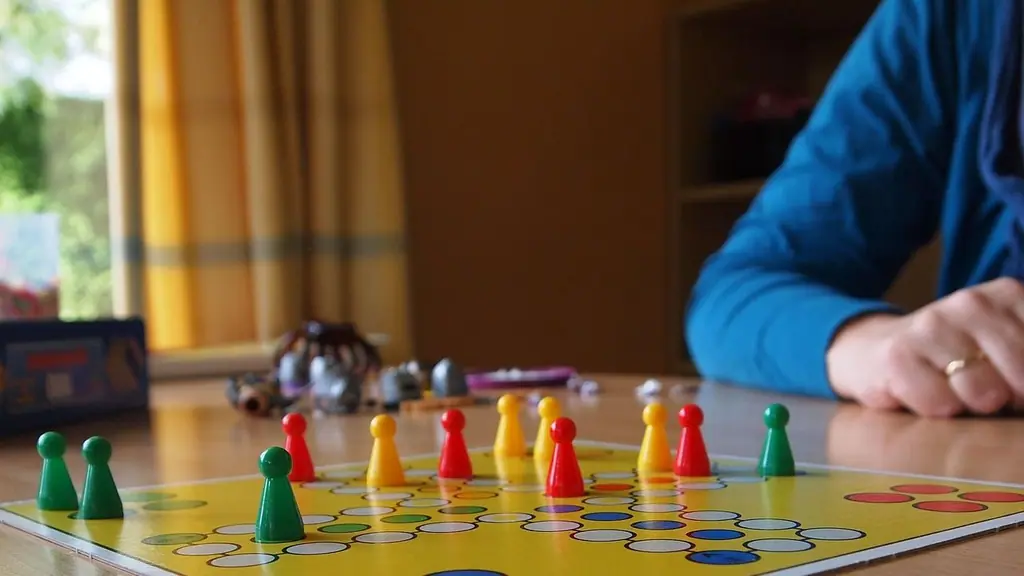
Family game night has a familiar failure mode. The oldest child wins, the youngest cries, someone accuses someone else of cheating, and the box goes back on the shelf for six months. Cooperative games offer a different shape: everyone plays against the game itself, and the table wins or loses together.
That one change does a lot. A six-year-old and a grandparent can contribute to the same goal at very different skill levels. Conversation becomes part of the strategy rather than trash talk. And losing feels less personal when it is shared.
This guide explains what actually makes a game cooperative, why the format suits mixed-age families, how to handle the common problem of one player taking over, and what to look for in local co-op video games. It describes mechanics and features rather than recommending specific titles.
What makes a game cooperative
Not every game played in a group is cooperative. A cooperative game has a few defining features:
- A shared goal. All players are working toward the same win condition, such as escaping before time runs out, clearing a board, or stopping a spreading problem.
- A shared outcome. Everyone wins or everyone loses. There is no individual score that decides a winner.
- An opponent that is the game itself. The pressure comes from a timer, a deck of escalating events, a limited number of moves, or a puzzle.
- Something worth discussing. Good co-op games give players decisions to talk through: whose turn should spend the last resource, which threat to deal with first.
Many co-op games add two more ingredients: different roles, where each player has a special ability, and limited or hidden information, where players can see things others cannot and must communicate. Both make each person's contribution feel necessary.
There are also in-between formats. "Team versus team" games are competitive between groups but cooperative within them. "Semi-cooperative" games have a shared threat but an individual winner. These can be fun with older children, but they reintroduce the win-lose tension that pure co-op avoids.
Why co-op suits mixed ages
Research on families using media together offers useful design ideas. A 2011 report from the Joan Ganz Cooney Center and the LIFE Center, The New Coviewing, set out principles for what it calls joint media engagement. Two apply directly to family games:
- Multiple planes of engagement. An activity works best when it gives every participant something suitably entertaining and challenging, rather than aiming at the lowest common denominator.
- Differentiation of roles. Giving players distinct jobs matched to their maturity keeps everyone challenged, reduces arguments about who is in charge, and gets partners talking to coordinate their efforts toward a common goal.
The report also flags a common barrier: "jockeying for controllers," along with scolding and bossy instructions about who may touch what. Co-op games with clear roles reduce that friction.
What the evidence says
The report's principles come mainly from case studies and design experience, plus earlier research on parents watching television with children. They are well-reasoned design guidance, not a controlled trial showing that cooperative games produce specific developmental outcomes. The AAP's 2026 policy guidance for families encourages adults to "watch and play alongside" children as the best way to understand what they use, which fits naturally with co-op play.
The quarterback problem, and house rules that fix it
The best-known weakness of cooperative games is often called "quarterbacking" or "alpha playing": one confident player, often an adult or older sibling, starts telling everyone exactly what to do. The game becomes a solo puzzle with spectators.
House rules that help:
- The active player decides. Others can suggest, but the person whose turn it is makes the final call, even if it is not the "best" move.
- One suggestion per person. Each player may offer one idea per turn, then stays quiet.
- Ask, don't tell. Phrase advice as questions: "What do you think happens if you go left?"
- Hide hands. If the game allows it, keep cards private so no one can play everyone's hand.
- Rotate the expert. If an adult knows the game well, give them the most limited role, or let a child be the rules keeper.
- Talk through the loss. When the game wins, spend a minute on "What would we try next time?" instead of "If only you had listened."
For younger players, quarterbacking can be partly helpful. A five-year-old may genuinely need an older partner to explain choices. The goal is for the child to make the decision, not for the adult to make it for them.
Local co-op video games: features to look for
Video games can be cooperative too, and playing on one screen in the same room keeps the social benefits of a board game. When you read a store page or try a demo, look for these features.
| Feature | What it means | Why it helps families |
|---|---|---|
| Local or couch co-op | Two or more players on one device and one screen (shared or split) | Play together in the same room, no online accounts needed |
| Drop-in, drop-out | A second player can join or leave at any time without restarting | A younger child can join for ten minutes and leave without ending the session |
| Helper or support roles | One player has a simpler job, such as collecting items or guiding a camera | Mixed abilities can play side by side |
| Assist modes and difficulty options | Settings that slow the game, reduce damage or skip tough sections | Reduces frustration for less experienced players |
| Generous shared lives or respawning | A player who falls can rejoin quickly | Mistakes do not end the game for everyone |
| Remappable controls | Buttons can be reassigned | Helps small hands and players with motor differences |
| Offline play | No internet connection or chat needed | Avoids contact with strangers entirely |
Accessibility guidance used by game developers recommends many of these as good practice. The Game Accessibility Guidelines, for example, list offering a wide choice of difficulty levels and allowing controls to be remapped among their basic recommendations, and suggest assist modes and adjustable difficulty during play. Some consoles also offer a system setting that lets two controllers act as one, so a helper can support a player who needs it. Our accessible gaming guide covers those options in more detail.
Before buying, also check the age rating, content descriptors and in-game purchase labels. Our framework for choosing age-appropriate video games walks through that process.
A family checklist for picking a co-op game
Use these questions with any game, on a table or a screen:
- Can the youngest player make a real decision on their turn?
- Does every player have a role that matters?
- How long is one game? (Shorter is better at first.)
- How much reading is involved, and can a reader help without taking over?
- Is losing interesting, with a clear reason that suggests a new plan?
- For video games: is there local co-op, drop-in play, and an offline mode?
- For video games: are there in-game purchases or online chat, and can they be turned off?
Healthy play
Agree on the stopping point before you start: "Two rounds, then bath." Cooperative games are naturally episodic, and the end of a round or level is a gentle place to stop. If someone is getting upset, a shared loss is a good moment for a snack break rather than an immediate rematch.
Try co-op play with our games
Our browser games are single-player, but several work well as team activities.
Play it
Play Spot the Difference as a team: one person scans the left side of the scene, the other the right, and you take turns clicking. On the Logic Grid, give each player one clue to read aloud and "own." In the Maze, one person gives directions while the other drives.
If a co-op evening goes well, the same habits carry over to solo games: sit alongside, let the child steer and talk about what happens on screen. Our guide to playing video games with your child covers that side, and the gaming for families topic collects the rest.
Sources
- Helping Kids Thrive in a Digital World: AAP Policy Explained, American Academy of Pediatrics (HealthyChildren.org)
- The New Coviewing: Designing for Learning through Joint Media Engagement (Takeuchi & Stevens, 2011), Joan Ganz Cooney Center at Sesame Workshop
- Game Accessibility Guidelines: full list, Game Accessibility Guidelines
- Xbox Accessibility Guidelines, Microsoft