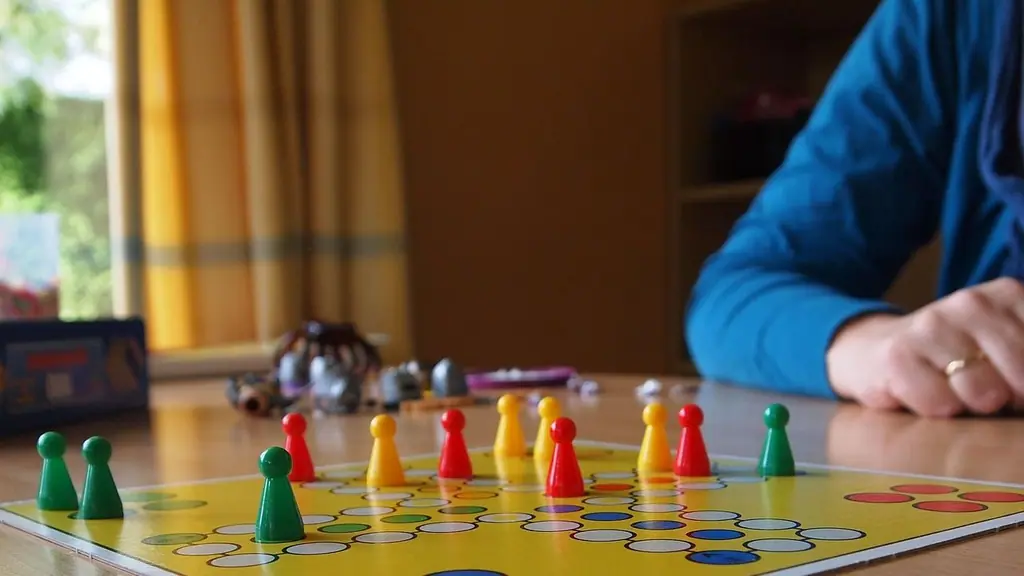
There is a difference between a child playing a game while an adult is in the room and a child and adult playing a game together. In the first, the screen is a babysitter. In the second, it is something closer to a shared picture book: a thing to point at, talk about and puzzle over side by side.
Researchers call the second kind of experience joint media engagement, and pediatric guidance has leaned into it. The American Academy of Pediatrics' 2026 policy guidance for families recommends that parents watch and play alongside their children as the best way to learn what they are using and how they respond.
This guide explains what co-play is, what the evidence behind it actually looks like, and how to make a shared session work: what to say, when to step back, how to handle losing and how to finish well.
What co-play means
In 2011, the Joan Ganz Cooney Center and the LIFE Center published The New Coviewing, a report that extended the old idea of parents watching TV with children to newer media. It defined joint media engagement as spontaneous and designed experiences of people using media together, and listed its modes as viewing, playing, searching, reading, contributing and creating.
Co-play is the playing version: an adult and child sharing attention on the same game at the same time, whether that means two controllers, one tablet passed back and forth, or a child driving while the adult helps navigate.
The report described several features of productive joint engagement. Three translate especially well to games:
- Mutual engagement. Both partners are genuinely interested, not participating out of obligation.
- Dialogic inquiry. The game sparks conversation and shared sense-making.
- Focus on content, not control. The talk is about what is happening in the game, not about who holds the controller.
What the evidence does, and doesn't, show
What the evidence says
Most of the evidence for co-play comes from co-viewing television, not from games. Studies from the 1970s and 1980s found that children learned more from Sesame Street when an adult watched with them, and later research on parental mediation linked talking about programs with better outcomes. The 2011 report notes that very few empirical studies had specifically evaluated children's learning through joint engagement with digital media, and one large preschool trial it describes found literacy gains that were not related to how much teachers co-viewed. So co-play is a well-grounded, low-risk practice with plausible benefits, especially for connection and conversation, rather than a proven way to boost particular skills through gaming.
That caveat does not make co-play less worthwhile. It is the simplest way to know what your child is doing on a screen, it builds shared interests, and it lets you notice when a game is frightening, frustrating or pushing purchases.
Let your child lead
One of the clearest findings in the report's home observations was that joint media engagement was often started by children rather than parents. Its design advice was to give children the chance to start the interaction and steer it, with adults responding to the child's reactions rather than pursuing their own agenda.
In practice:
- Ask to be shown. "Can you teach me how this works?" turns your child into the expert, which children love.
- Be a beginner. If you are worse at the game, say so. Being taught is good for both of you.
- Follow their interest. If they want to spend ten minutes decorating a house instead of finishing a level, that is their choice of play.
- Hold back the instructions. Resist narrating every move. Silence while they think is part of the game.
Conversation prompts during play
The report described simple types of comment that help adults and children make sense of media together: labeling what is on screen, retelling what happened, wondering about characters' feelings, evaluating choices, connecting to the child's own life, and joining in. Here is how those look in a game.
| Moment in the game | Prompt type | Example |
|---|---|---|
| Something new appears | Labeling | "What's that glowing thing? Have we seen it before?" |
| After a level or puzzle | Retelling | "How did you get past that part?" |
| A character reacts | Feelings | "How do you think she feels about losing the key?" |
| A choice comes up | Evaluating | "Which way do you think is safer? Why?" |
| A familiar setting | Connecting | "That bridge looks like the one at the park." |
| A tricky section | Planning | "What's your plan for the next jump?" |
| Something funny happens | Joining in | Laugh, cheer, groan along |
You do not need to use all of these. Two or three good questions in a session are plenty. The goal is conversation, not a quiz.
Handling losing together
Young children often find losing in a game genuinely upsetting, and co-play is a safe place to practice it.
- Name the feeling. "That was frustrating. You were so close."
- Model your own losses. "I fell off again! I'm going to try going slower."
- Make the next try smaller. Suggest a single change rather than a new strategy.
- Choose games that forgive. Quick retries, checkpoints and no lives counter reduce the sting.
- Know when to stop. If tears arrive, end on something easy or switch to a different activity.
Cooperative games, where you win or lose as a team, are particularly good for this. Our guide to cooperative games for families explains what to look for.
Use co-play to model breaks
Playing together lets you show what a healthy ending looks like, not just announce it.
- Agree on the end before you start: "We'll play until we finish this world, then it's dinner."
- Give a warning at a natural stopping point, such as the end of a level, rather than mid-action.
- Stop yourself first. Put your controller down and say what you are doing: "I'm saving and stopping now."
- Talk about the game afterward, away from the screen. "What do you want to try tomorrow?"
- Keep evenings calm. The AAP recommends screen-free time, especially in the hour before bed, and suggests keeping bedrooms screen-free.
Healthy play
For children under 5, WHO guidance (2019) recommends no screen time under age 1, no sedentary screen time at age 1, and no more than one hour a day for ages 2 to 4, with less being better. Co-play does not change those limits, but it does make the time you do spend far more interactive. Our guide to healthy gaming routines has more on breaks and sleep.
A first co-play session
If you have never played with your child before, keep the first session short and simple:
- Pick a game with no purchases, no chat and no reading required.
- Sit side by side, not with you hovering behind.
- Let them show you the controls, or learn them together.
- Ask one or two of the prompts above.
- Stop while it is still fun, and say what you enjoyed.
Play it
Memory Match works well as a turn-taking game: one person flips two cards, then the other, and you remember together where the shapes are hiding. Spot the Difference is good for pointing and talking ("Is that hat different?"), and the Maze lets a child drive while you help plan the route.
The AAP's 2026 statement frames children's media as part of a wider digital ecosystem that families, designers and policymakers all shape. At home, the most direct influence most parents have is simply being there, playing along. For the bigger picture on time limits, see our guide to screen time guidance in 2026, and browse more in gaming for families.
Sources
- The New Coviewing: Designing for Learning through Joint Media Engagement (Takeuchi & Stevens, 2011), Joan Ganz Cooney Center at Sesame Workshop
- Helping Kids Thrive in a Digital World: AAP Policy Explained, American Academy of Pediatrics (HealthyChildren.org)
- Creating a Child-Friendly Digital World: AAP Releases New Media Recommendations, American Academy of Pediatrics (HealthyChildren.org)
- To grow up healthy, children need to sit less and play more, World Health Organization