First you put on your socks, then your shoes. Red block, blue block, red block, blue block. 2, 4, 6, 8. Sequences are everywhere in a young child's day, and noticing the order of things, and the rules behind that order, is one of the first steps into logical thinking.
"Sequencing" is a broad word. It can mean putting the pictures of a story in order, continuing a pattern of shapes, finding the next number, or following a set of steps in the right order. These are different skills, but they share a core question: what comes next, and how do I know?
This guide sorts those skills out, explains why researchers in early math take patterns seriously, and offers activities by age, all of which need little more than paper, blocks or household objects.
What "sequencing" covers
| Kind of sequence | What the child does | Example |
|---|---|---|
| Event order | Puts steps or story events in time order | Three pictures: seed, sprout, flower |
| Repeating pattern | Spots the unit that repeats and continues it | Circle, square, circle, square, ... |
| Growing pattern | Notices how each step changes from the last | A staircase of 1, 2, 3, 4 blocks |
| Number sequence | Finds the rule linking the numbers | 5, 10, 15, 20, ... |
| Algorithm | Follows or writes steps that always get the same result | The steps for brushing teeth |
Each kind asks a child to look beyond single items to the relationship between them. The National Council of Teachers of Mathematics (NCTM) includes this thinking in its pre-K to grade 2 expectations: children should sort, classify and order objects; recognize, describe and extend patterns such as sequences of sounds, shapes or simple numbers; translate patterns from one representation to another; and analyze how both repeating and growing patterns are generated.
Why researchers pay attention to early patterns
Patterns are often treated as a nice extra in preschool. Recent research suggests they deserve more attention.
What the evidence says
Early pattern skills predict later math, but prediction is not proof of cause. In a longitudinal study of 517 children from low-income families followed from age 4 to 11, Bethany Rittle-Johnson and colleagues (2017) found that preschool patterning knowledge, along with counting and quantity knowledge, predicted fifth-grade math achievement. A smaller study of 65 preschoolers (Zippert, Douglas and Rittle-Johnson, 2020) found that repeating-pattern knowledge predicted end-of-kindergarten math knowledge after accounting for working memory, and still predicted number knowledge, such as counting to 100, after also accounting for children's earlier math skills. These are correlational studies: they show that pattern skills and later math go together, not that pattern games cause math gains. The authors suggest that both involve spotting predictable sequences based on underlying rules.
That is a good reason to include patterns in everyday play, without expecting any one game or worksheet to transform math results.
Activities by age
Ages are rough guides. Many children will be ready earlier or later, and older children still enjoy the simpler activities when they get to be the puzzle setter.
Ages 3 to 4
- Routine pictures. Draw or photograph three steps of a familiar routine (wash hands, dry hands, eat). Mix them up and put them back in order together.
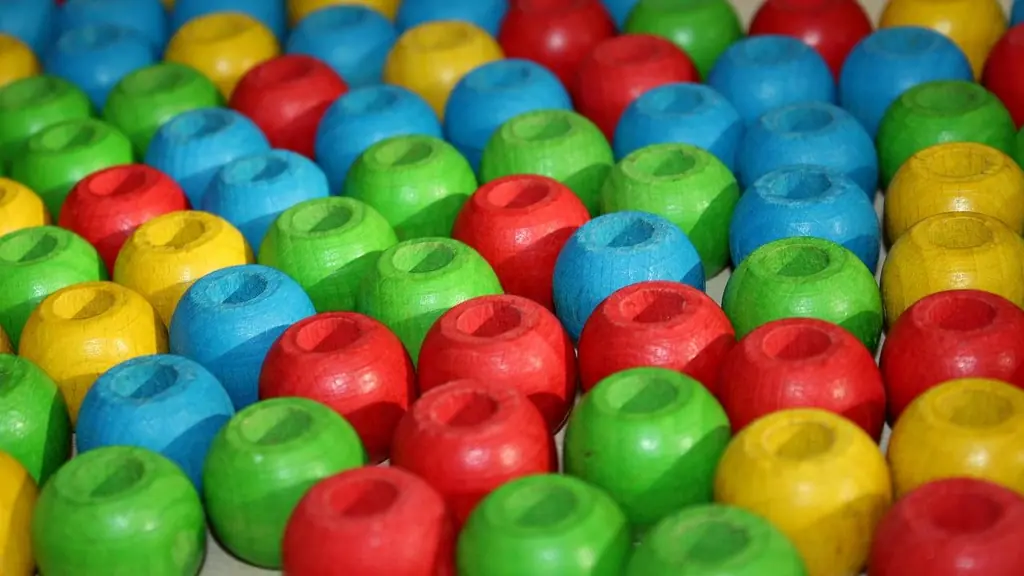
- Simple AB patterns. Make a "train" of alternating toys: car, block, car, block. Ask what comes next.
- Sound and movement patterns. Clap, stomp, clap, stomp. Children can copy the pattern before they can describe it.
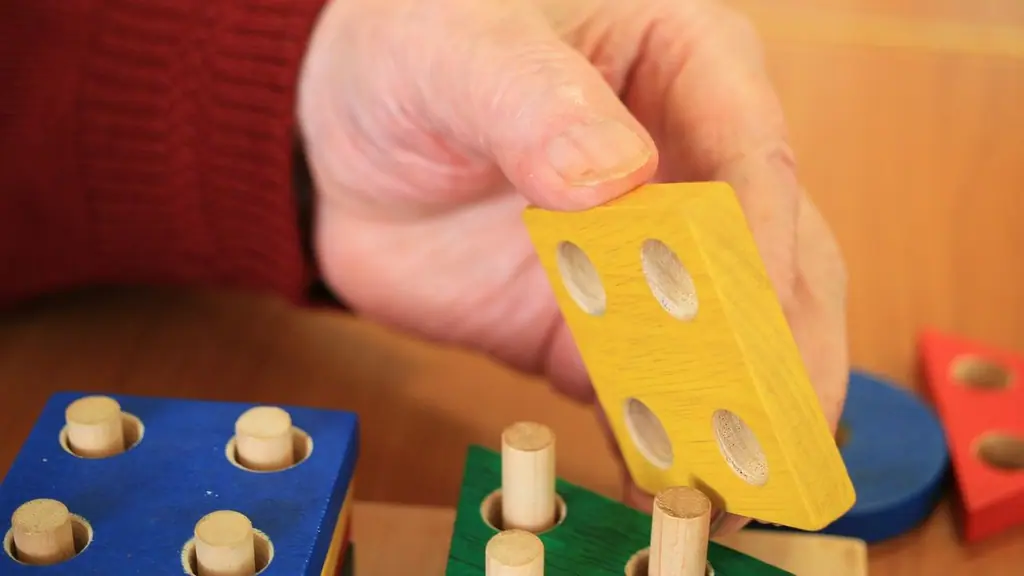
- Sorting first. Sorting by color or size is a building block for ordering. Harvard's Center on the Developing Child suggests sorting games for toddlers and then, from about 3, switching the sorting rule partway through to add a challenge.
Ages 4 to 6 (pre-K and kindergarten)
- Harder repeating units. Move from AB to ABB (red, blue, blue), AAB and ABC patterns.
- Find the mistake. Lay out a pattern with one piece wrong and ask the child to fix it.
- What's missing? Leave a gap in the middle of a pattern instead of at the end.
- Translate the pattern. Turn red, blue, red, blue into clap, stomp, clap, stomp. Recognizing that two patterns share the same structure is one of the NCTM expectations above.
- Story sequencing. Tell a short story, then draw its beginning, middle and end in three boxes.
Ages 6 to 8 (grades 1 to 3)
- Growing patterns. Build a staircase with blocks (1, 2, 3, 4) or a pattern of squares (1, 4, 9). Ask how many blocks the next step needs, and the step after that.
- Counting-on sequences. 3, 6, 9, 12, ... or counting back: 20, 18, 16, ...
- Make a rule, guess a rule. One player writes four numbers following a secret rule; the other guesses the next number and the rule.
- Recipe order. Cooking is a natural sequencing activity, and Harvard's guide notes that holding a recipe's steps in mind gives working memory a workout too. Adult supervision for anything hot or sharp.
Ages 8 and up
- Two-step rules. Double and add one: 1, 3, 7, 15, ...
- Sequences with growing gaps. 1, 2, 4, 7, 11, ... (the gap grows by one each time).
- Shape sequences that rotate or change two features at once, such as an arrow turning a quarter turn while switching between filled and empty.
- Predict far ahead. What would the 20th term be? Can you find it without writing out all twenty?
Talking about the rule
The richest part of a sequencing activity is often the conversation afterward. A child who can explain a pattern understands it far better than one who guesses the next item correctly. Useful prompts:
- "What part keeps repeating?" (helps children find the core unit of a repeating pattern)
- "How do you know?"
- "Is there another rule that would also work?"
- "What would come tenth? How could you work it out without counting all the way?"
- "Can you make a pattern for me to solve?"
Try this
When a child gives an unexpected answer, ask them to explain before correcting. Sometimes their rule is different from yours but still fits the items shown. That is a genuine insight about patterns: a short sequence can follow more than one rule.
Algorithms in daily routines
An algorithm is a set of steps that, followed in order, always produces the same result. Children follow algorithms all the time without the name: getting dressed, brushing teeth, setting the table.
A fun way to make this visible is the "robot grown-up" game:
- Pick a simple task, such as making a jam sandwich or putting on a coat.
- The child gives step-by-step instructions; the adult follows them exactly and literally, like a robot.
- When a step is missing or in the wrong order ("Put the jam on the bread" before opening the jar), the robot gets stuck, and the child "debugs" the instructions.
- Write the corrected steps as a numbered list and try again.
This links sequencing to early computer science and problem-solving. Our guide to problem-solving activities for kids has more ideas in the same spirit, and game design fundamentals for young creators shows how children can turn rules and sequences into games of their own.
Healthy play
Keep sequencing play short and playful, and stop while it is still fun. If a pattern is frustrating, step back to a simpler one or switch to making patterns instead of solving them. There is no need to turn every walk or snack into a lesson.
Try it online
Two of our games focus on sequences, and both explain the rule after every answer, which makes them good conversation starters.
Play it
Play Pattern Challenge for shape patterns that repeat by shape, fill, size or direction: ask "what part keeps repeating?" before choosing. Then try Sequence Builder for number sequences such as counting on, doubling and growing gaps: say the rule aloud before you check it.
Children who enjoy finding the rule behind a sequence are often ready for clue-based deduction next. Our progression of logic puzzles from preschool to age 12 picks up where patterns leave off, and the logic and reasoning topic page collects related games and guides.
Sources
- Early Math Trajectories: Low-Income Children's Mathematics Knowledge From Ages 4 to 11 (Rittle-Johnson et al., Child Development, 2017), PubMed, US National Library of Medicine
- Finding patterns in objects and numbers: Repeating patterning in pre-K predicts kindergarten mathematics knowledge (Zippert et al., Journal of Experimental Child Psychology, 2020), PubMed, US National Library of Medicine
- Principles and Standards for School Mathematics: Algebra Standard, National Council of Teachers of Mathematics
- Enhancing and Practicing Executive Function Skills with Children from Infancy to Adolescence, Center on the Developing Child, Harvard University