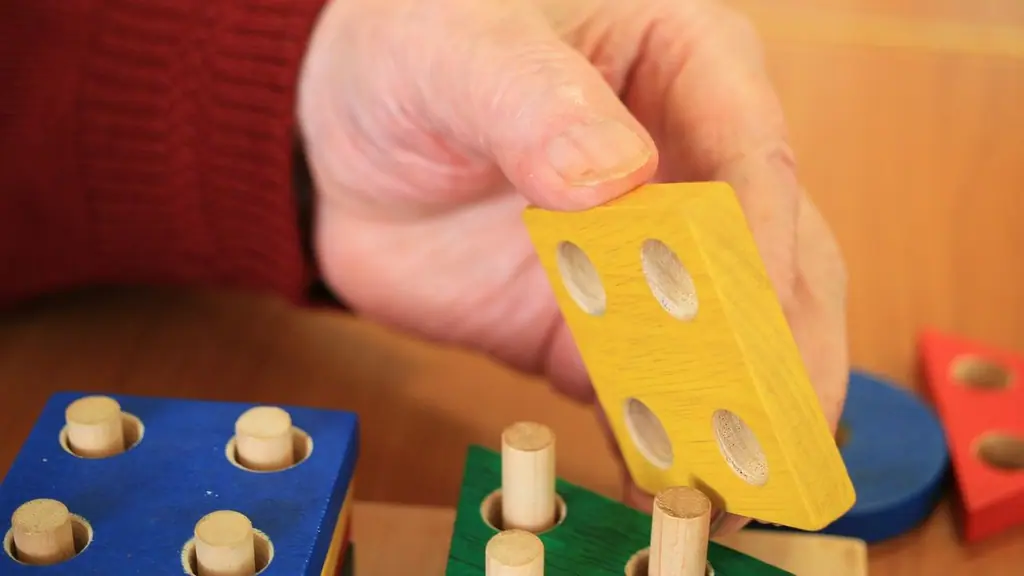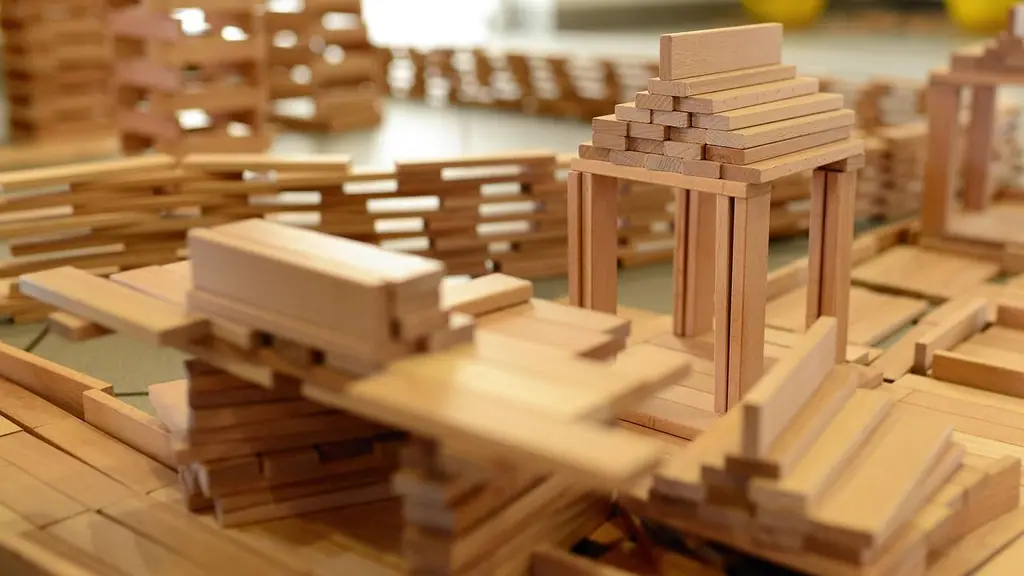
A child stares at a tower that keeps falling over, a puzzle piece that will not fit, or a maze with no obvious way out. What happens in the next thirty seconds is where problem solving lives: do they try something different, ask for help, or give up and walk away?
Problem solving is not a single talent that some children have and others lack. It is a set of habits: slowing down to understand the problem, trying a plan, noticing when it is not working, and adjusting. Those habits grow through practice, and the best practice usually looks like play.
This guide gives parents and teachers a simple framework, a bank of everyday activities, and a toolkit of "stuck strategies" children can use on their own. It also looks honestly at what research on praise and mindset does and does not show.
Four steps, in kid-sized words
In How to Solve It, first published in 1945, the mathematician George Polya described problem solving as four phases: understand the problem, devise a plan, carry out the plan, and look back. He was writing about mathematics, but the structure works for a jigsaw, a block bridge or a logic puzzle. Here is a version young children can remember.
| Polya's step | Kid-sized version | A question to ask |
|---|---|---|
| Understand the problem | "What's the job?" | What do we need to end up with? What are the rules? |
| Devise a plan | "What could we try?" | Have we solved something like this before? |
| Carry out the plan | "Try it and watch" | Is it working so far? |
| Look back | "What did we learn?" | Would we do anything differently next time? |
The step children skip most often is the first one. They start moving pieces before they know what "finished" looks like. Asking "What's the job?" out loud, every time, is a small habit with a big payoff.
The last step gets skipped by adults. When a puzzle is solved, everyone wants to move on. A ten-second look back ("What was the trick on that one?") turns a lucky success into something the child can reuse.
Everyday activities that invite real problems
The richest problems are open-ended: there is more than one good answer, and the child can see for themselves whether an attempt worked. You do not need special kits.
- Engineering puzzles. Span the gap between two stacked books with nothing but paper and tape, strong enough to carry a toy car. Fold a sheet of foil into a boat and see how many coins it floats before sinking. Prop up a tray as a ramp and adjust it until a marble stops on a chalk line. Each one shows straight away whether the idea worked, and there is always a better design to try.
- Kitchen and household problems. Fit all the groceries into two bags. Set the table for six with only four matching plates. Work out how many trips it takes to carry the laundry upstairs.
- Route problems. Plan the walk to the park that passes the most dogs, or draw a map of the house for a treasure hunt. Wayfinding puzzles like these are a gentle bridge into mazes and maps.
- Card and board games. The Center on the Developing Child at Harvard notes that games where children track cards, plan ahead and adjust to an opponent's moves give regular practice with working memory and flexible thinking, and recommends increasing the complexity of games as children grow.
- Logic puzzles. Odd-one-out puzzles for younger children, and later the grids explained in our guide to logic puzzles for kids, age by age.
Try this
Keep building materials age-appropriate. Small blocks, marbles, coins, beads and balloon pieces are choking hazards for children under 3 and for older children who still mouth objects. Supervise scissors, hot glue and anything that needs a step stool, and keep tall towers away from faces and pets.
Teach "stuck strategies" before they are needed
Persistence is easier when a child knows what to do while stuck, rather than just being told to keep going. Introduce these one at a time, when things are calm, and write them on a card that lives near the puzzles.
- Say the problem out loud. Restating it often reveals a rule you forgot.
- Make it smaller. Solve one corner, one row or one clue first.
- Try the opposite. Start from the end of the maze, or from the bottom of the tower.
- Draw it. A quick sketch frees up working memory.
- Change one thing. If the bridge falls, change only the support, not everything at once.
- Take a short break. Walking away for two minutes is a strategy, not a failure.
- Ask a specific question. "Can you give me a hint about the top row?" works better than "Help!"
Model these yourself. When you are stuck on a recipe or a flat-pack shelf, narrate it: "I'm going to make this smaller and just do the left side first." Children copy what they see far more than what they are told.
Praise the process, with realistic expectations
How adults talk about effort matters, but the research is more nuanced than posters suggest.
What the evidence says
"Growth mindset" research studies the belief that abilities can be developed. One of the largest and most carefully run tests is a 2019 national experiment in US secondary schools: a short online lesson (under an hour) teaching that intellectual abilities can grow improved grades among lower-achieving students, and grades changed mainly in schools where peer norms were in line with the message (Yeager and colleagues, Nature). That is evidence that a well-designed message can help some students in some contexts. It is not evidence that praising effort at home makes children smarter, and the size of average effects across the wider field is still debated.
In practice, process praise is low-risk and specific, which is reason enough to use it:
- Name the strategy: "You tried starting from the corner, and that worked."
- Name the persistence: "You kept going after the tower fell three times."
- Avoid fixed labels: "You're so smart" can make the next hard puzzle feel like a test of who you are.
- Do not praise effort that went nowhere without also helping with strategy. Effort alone is not the point; effort plus a better plan is.
Keep it playful
Problem solving stops being fun when it becomes a performance. The American Academy of Pediatrics describes play as central to children's development, including the planning, organizing and self-regulation skills that problem solving draws on. Play keeps the stakes low enough for children to take risks.
Healthy play
Watch for the tipping point between productive struggle and distress: clenched jaw, tears, throwing pieces. That is the moment to offer a smaller step, a hint or a break, not a lecture about persistence. Ending on a success, even an easy one, makes the next session more inviting.
A few ways to keep it light:
- Let children set some challenges for you, and let them watch you struggle.
- Use silly constraints: build a tower using only your non-dominant hand, or solve a maze backwards.
- Celebrate interesting failures: "That collapse was spectacular. Why do you think it happened?"
- Stop while it is still fun. A puzzle left half-finished on the table often gets picked up again later.
Try it with our games
Our browser games are designed around the same four steps, with no forced timers.
Play it
Try the Logic Grid together on Easy. Before marking anything, read all the clues aloud ("What's the job?"), then pick the clue that gives a definite yes or no first ("make it smaller"). Afterwards, ask which clue unlocked the rest. For a spatial version, the Sliding Puzzle rewards solving the top row first and then never disturbing it.
If your child enjoys the grid, our step-by-step method for solving logic grid puzzles turns those instincts into a repeatable system.
A note on what these activities can and cannot do
Problem-solving games give children practice with planning, attention and handling frustration, and that practice is worthwhile in its own right. What the evidence does not support is the idea that a particular game will raise IQ or produce skills that automatically transfer to every subject. Our guide to whether brain-training games work looks at that question in detail.
The most reliable approach is variety: building, card games, puzzles, route planning and real household problems, with an adult who asks good questions and resists the urge to take over. For more ideas, browse the logic and reasoning topic.
Sources
- How to Solve It (G. Polya), paperback edition, Princeton University Press
- Enhancing and Practicing Executive Function Skills with Children from Infancy to Adolescence, Center on the Developing Child, Harvard University
- A national experiment reveals where a growth mindset improves achievement (Yeager et al., 2019), Nature
- The Power of Play: How Fun and Games Help Children Thrive, American Academy of Pediatrics (HealthyChildren.org)